051
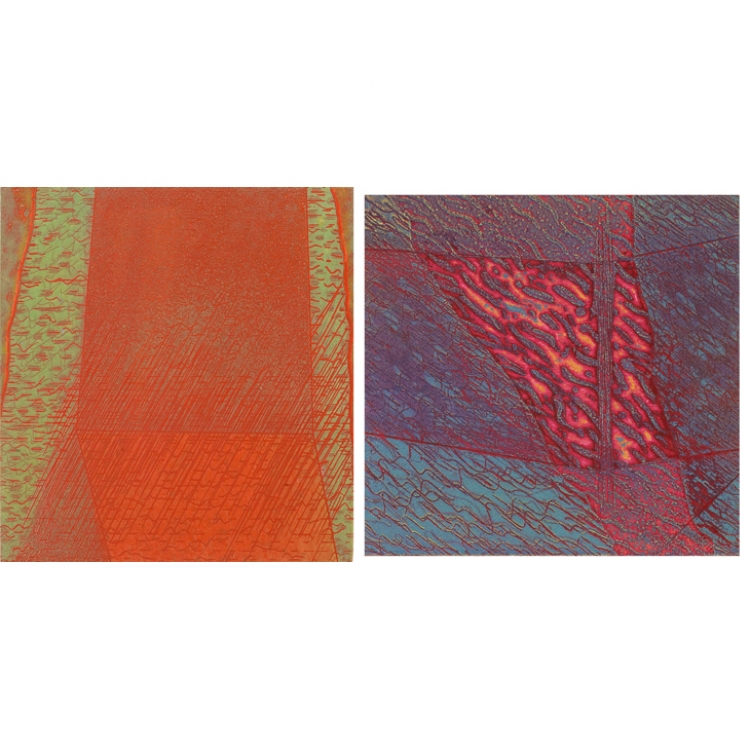
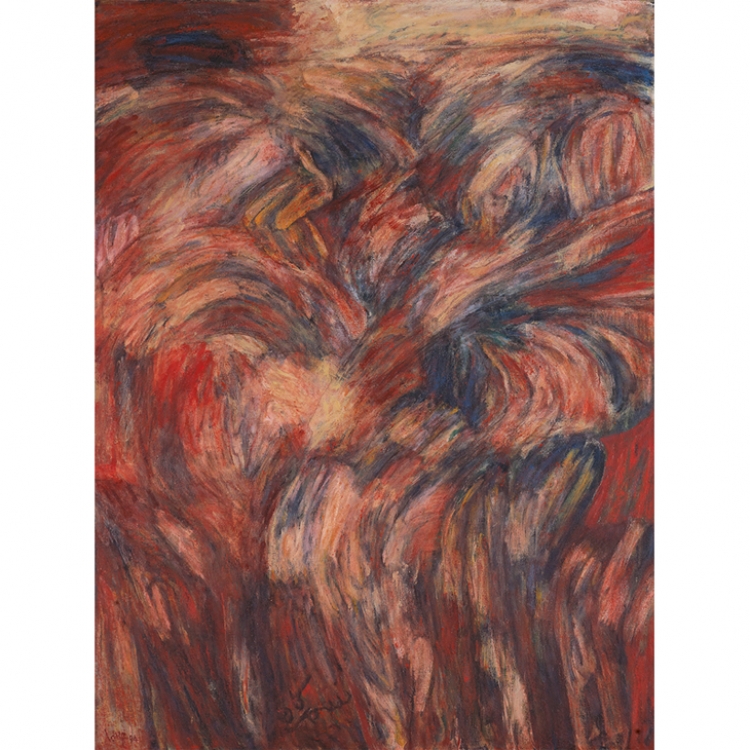
This piece is riven by diagonal slanted lines on top and sturdy stanchions jutting up from the bottom. On top, the unusually bold and curved lines set a heavier pace unlike the more unruly sweeps of his Gelombang series. The style and technique displayed here may have signaled the early flushes of Latiff’s Rimba series, with a contemplative exterior. The composition is drier and more arid with bold streaks as opposed to the fusion of organic forms and man-made architecture of his Pago-Pago series.
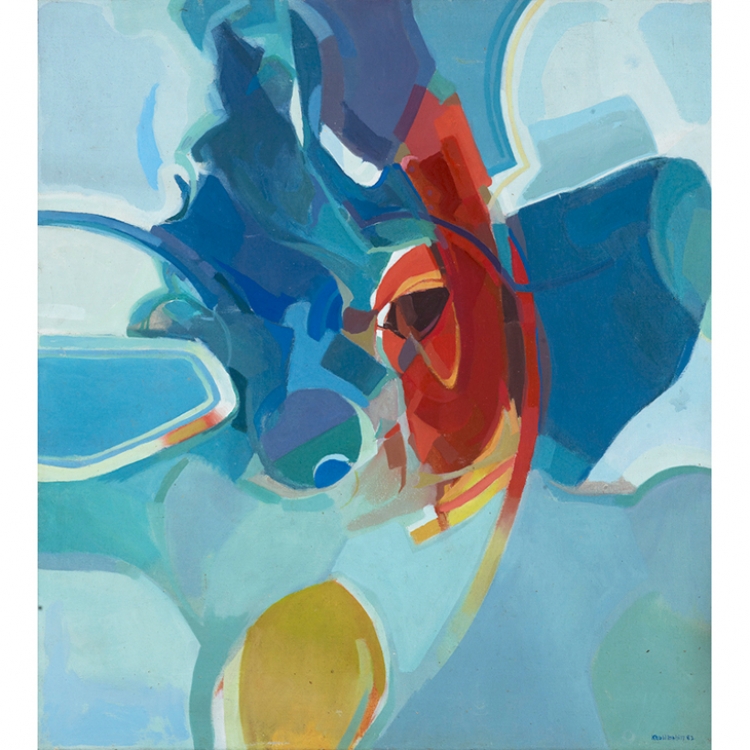
This piece titled New Landscape proves to be groundbreaking with intense and lively movement within the image. The unusually thick and heavy lines are juxtaposed against fluid tonal strokes within the forms. Latiff masterfully balances the warm yellows and reds in the foreground with the cool blues and greens peering through the corners in the background, adding depth to the picture. A constant visual flux between the fore and the distanced, the vigorous and the instinctive keeps the viewer on edge, all the while presenting an effortless and profound balance in the painting. Like Latiff’s latest body of work Voyage, it still keeps close to his affinity with landscapes often with the structural intrusions of Man.
Acquired directly from the artist by the present owner, this piece is kept in pristine condition for over two decades. Now, this precious gem will appear in public for the very first time.
Latiff is known for his art of painting, printmaking and sculptures as well as his poetry and books on aesthetics. He graduated from the German academy, DAAD (Deutscher Akademescher AustGuschdientst) in Bonn 1960. He also took up printmaking courses at the Atelier La Courrier in Paris and the Pratt Institute in New York in 1969. His first major art prize was the 2nd Prize (Graphic) in the 1968 Salon Malaysia. As a writer, he won the Malaysian Literary Awards from 1972 to 1976, the coveted South East Asian Writers Award in Bangkok in 1984, and the National Literary Award in 1984 and 1986. His first solo exhibition at the age of 10 at the Kota Raya Malay School in 1951 earned him the title of ‘boy wonder’ by the local press. He is now regarded as a national treasure and has become one of the leading modern artists in Southeast Asia.