078
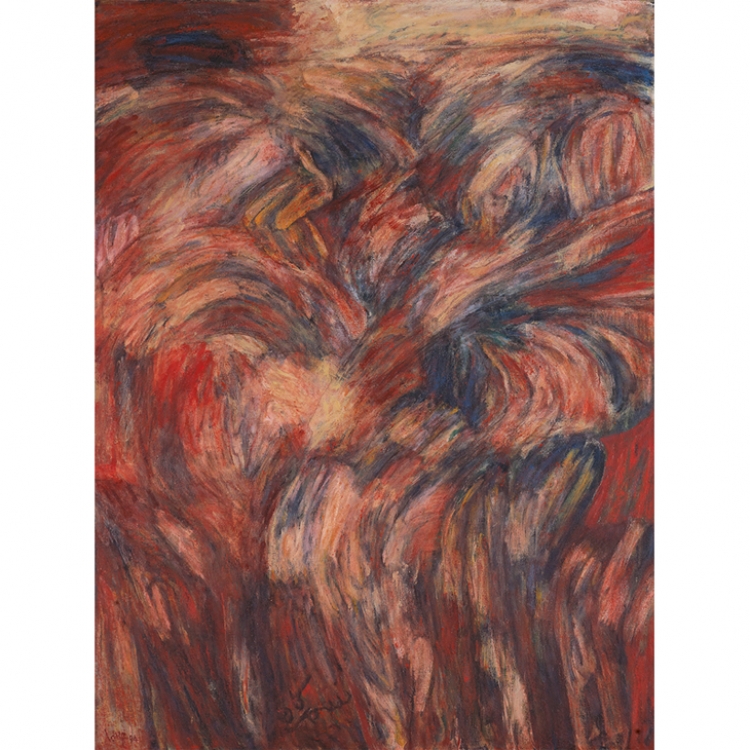
Nik Zainal Abidin seemed more disposed to iconography and style and was not interested in the narrative chronology in his wayang kulit paintings based on the Ramayana or the Bhagavad Gita (Song of the Divine One). Among others, this work from the Bhagavad Gita features the god-child Krishna (in the centre) and the Pandava warrior Prince Arjuna (below centre). Krishna, who eventually steers the chariot in battle, is concerned that Arjuna does not want to be embroiled in the fratricidal Kurushetra war against the Kauravas and reminded him of the Yogic and Vedantic philosophies about devotion and wisdom and that he must rid the evil forces and save Dharma.
Wrote Dolores Wharton in her book, Contemporary Artists of Malaysia: A Biographical Survey: “There are many who tried their hands at painting wayang kulit but none has unlocked the vitality of drama or acquired the skills of painting the figures that Nik Zainal does so effortlessly.”
Hailed the Painter of the Epics, Nik Zainal Abidin was the pioneer who transferred the wayang kulit leather puppets and its legends onto canvas. He is also known for his design of the Kunci Ibu Kota, the cokmar (royal mace) and the royal throne for the Yang di-Pertuan Agong in 1960 and the mural for the West Wing of the National Museum in Kuala Lumpur. He worked as a set designer for RTM from the 1960s until his retirement in 1987. He won First Prize in the Joy of Living Exhibition in 1964 and the Merdeka Exhibition in 1967. He became a member of the Wednesday Art Group, which was formed in 1955 and was selected for a German cultural tour in 1970.